
What Are Smart Glasses in 2025? Form Factor, Market Momentum, AI & Athletic Intelligence
Table of Contents
- What Are Smart Glasses in 2025? Zero Adaptation & Built on Habits
- Form Factor: From Barrier to Driver of Adoption of AR Glasses
- AI as the Smart Layer
- Market Momentum: Scaling Beyond Experiments
- Meta Connect 2025: Oakley Athletic Intelligence & More Meta Smart Glasses
- Apple: Waiting to Strike
- Amazon, and Snap: The Next Movers on the AR Glasses Market
- Where It’s Heading
- About Lucid Reality Labs
Glasses have always been part of human life for vision correction, sun protection, and style. They’re one of the most familiar wearables in history, making them the perfect foundation for what comes next: smart glasses. What are smart glasses? AR glasses (or mixed-reality eyewear) look like ordinary frames but integrate sensors, displays, and AI to deliver digital information seamlessly into everyday routines. What’s different in 2025 is their role. No longer just an accessory, smart glasses are evolving into intelligent, always-on companions, blending AI, XR, and daily utility in ways that feel natural and immediate.
What Are Smart Glasses in 2025? Zero Adaptation & Built on Habits
The most successful technology doesn’t ask us to change behavior; it slips into habits we already have. With nearly 4 billion daily eyewear users worldwide, according to The Washington Post, Smart glasses don’t require a lifestyle shift. Instead, they build on familiar use cases:
- Eye protection — sunglasses and UV lenses.
- Enablement — prescription or vision-correcting eyewear.
- Special protection — industrial or field safety glasses.
- Sport & performance — multi-functional athletic eyewear combining comfort, safety, and tracking.
This is why adoption can scale quickly: smart glasses do not introduce “new gadgetry”; they seamlessly make the familiar more powerful.
Form Factor: From Barrier to Driver of Adoption of AR Glasses
For years, smart eyewear struggled with bulk, overheating, and weak battery life. 2025 changes that. Miniaturized chipsets, efficient batteries, and advanced optics now allow lightweight frames with full-day usability. So now AR Glasses form factor becomes a driver for mass adoption.
- Sleek & comfortable — wearable for hours.
- Fashionable & expressive — available in diverse styles and colors.
- Customisable — supporting corrective lenses, so no need to choose between vision and technology.
The breakthrough lies in keeping their familiar look while enhancing glasses with AI and XR. With features like gaze-triggered activation (where looking at a virtual assistant initiates interaction), glasses are moving toward hands-free, mainstream adoption.
AI as the Smart Layer
AI is what transforms what are smart glasses from wearable hardware into adaptive digital assistants. Through voice, gaze, or gesture, glasses can:
- Provide real-time translation for global communication.
- Deliver contextual recognition of objects, tools, or locations.
- Enable accessibility with spoken descriptions and visual cues for people with impairments.
In short, what are smart glasses in 2025 is a practical, everyday platform that sees, understands, and responds, making work, travel, and personal life more fluid.
Market Momentum: Scaling Beyond Experiments
The market has already shifted from the trial mode to acceleration. What started as niche experiments has quickly become a multi-billion-dollar industry, expanding faster than most analysts predicted. Valued at $1.93 billion in 2024, it is projected to surpass $8 billion by 2030, growing at a CAGR of more than 27%, according to Grand View Research. Meta currently commands about 70% of the market, driven by the strong performance of Ray-Ban Meta, which has already sold over 2 million units since launch and tripled sales in 2025, says The Verge. These adoption trends highlight a market that is no longer experimental but consolidating quickly around consumer demand.
Meta Connect 2025: Oakley Athletic Intelligence & More Meta Smart Glasses
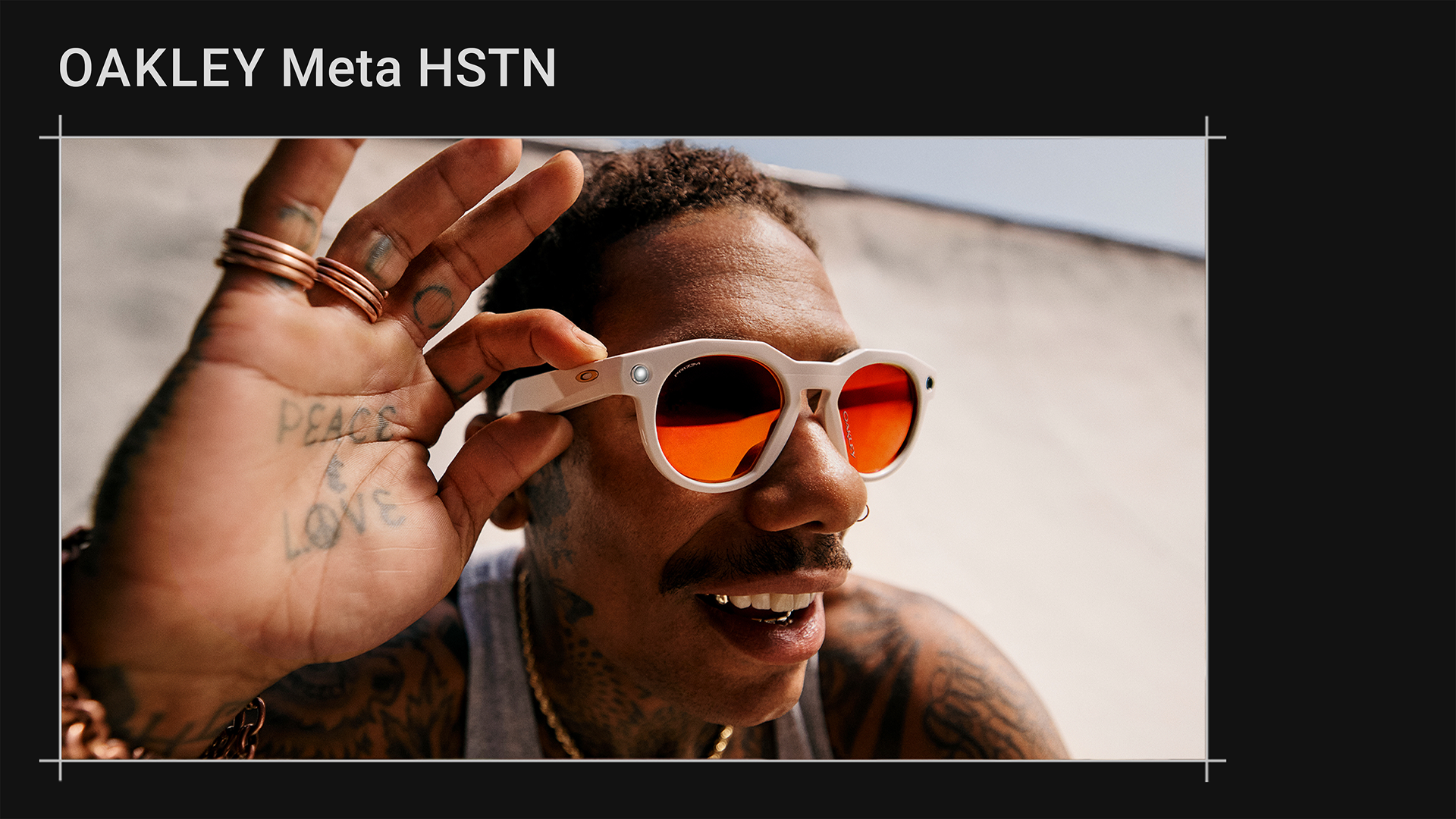
Meta has set a new tempo for the industry. In just 12 months, it jumped from the Orion prototype to the Ray-Ban Display, a polished, widely distributed consumer device. This sets the pace for the AR glasses race. Ray-Ban Meta adds double battery life and “conversation focus” to isolate the voice you care about in noisy spaces, standing for small, humane upgrades that drive daily use. Next step – adding Athletic Intelligence. Oakley Meta Vanguard pushes into performance with rugged design and stabilization, turning workouts into quantified, shareable moments. Partnering with Garmin and Strava, the glasses bring pace, heart rate, and elevation into your line of sight without breaking stride, shifting posture, or pausing activity. That’s a fundamental shift: from devices you stop to consult, to eyewear that flows with you in real time. It’s a use case no watch or phone can replace, technology empowering the body in motion and extending athletic capacity in ways that feel superhuman. This strategic change enables the entry of substantial new markets in professional and amateur sports. Loyal and engaged sports communities can allow for making smart glasses adoption lightning fast. In the US, amateur and recreational runners spend $1,748 annually on their hobby, including devices and eyewear, smart glasses priced below $500 slot in smoothly.
Ray-Ban Display offers a bright, off-center screen for messages, subtitles, and translation, paired with a Neural Band wrist strap for silent input, enabling private control without talking to your glasses. A wristband as a controller opens up a new way of interaction.
We’re moving from “ask-and-answer” to always-there help. Think longer live sessions, subtitles and translation on the lens, and more explicit conversations will enable more effective work for frontline teams and travelers, as well as cover accessibility needs.
Ray-Ban Display glasses don’t just mirror another screen; they unlock things only eyewear can do. Real-time transcription can bring conversations to people with hearing loss, while object recognition can describe a scene for those with low vision. That’s the shift from assistive function to empowerment.
By opening the Smart Glasses SDK, Meta is inviting developers to ship thousands of apps, which will allow driving usage and pushing smart eyewear into the mainstream. Coupled with Meta’s hardware line, Horizon OS, and a growing app/content store, this is a move from paying platform tolls to owning the road.
And Meta is not planning to slow down. A $3.5B partnership with EssilorLuxottica blends tech with fashion, design, and retail at scale. The aim is to ramp up Ray-Ban Meta production to 10 million units a year by 2026. Next up: Ray-Ban Display, available September 30 at $799, paired with a gesture-based wristband controller, marking another step toward a fully integrated ecosystem.
Real also: The Ultimate Guide to AR Glasses [Download]
Apple: Waiting to Strike
Apple looks set to enter smart glasses in 2026, expanding its lineup of AI-powered devices. Details are still scarce; however, Apple usually relies on the strength of its ecosystem and trusted privacy standards. The company may likely start with enterprise use, where security and manageability matter most.
After the September 9 event, the priorities are clearer: faster on-device AI, more powerful custom A/M chips, and a growing footprint of first-party servers. Owning both the device silicon and the backend gives Apple tighter control over performance and privacy, ensuring lower latency, stronger data protection, and quicker rollouts of new intelligent features across the portfolio.
Hardware hints are showing up, too. The new iPhone Air pushes thinness to the limit, with the camera bump doing more of the heavy lifting. Many see that as Apple is testing a shift toward concentrating sensors and computing in the camera module. This is an approach that could eventually support ultra-light smart glasses with on-board processing.
Looking to 2027, the iPhone’s 20-year milestone could be the moment Apple introduces truly lightweight wearables that open the next chapter of the spatial era.
Amazon, and Snap: The Next Movers on the AR Glasses Market
- Amazon (codename Jayhawk) is working on consumer AR glasses, plus a logistics-driven variant for delivery navigation. With its retail, data, and Echo ecosystem, Amazon could carve out a unique niche.
- Snap will bring consumer-ready Specs in 2026, powered by Snap OS 2.0 and leveraging its creator ecosystem to accelerate adoption.
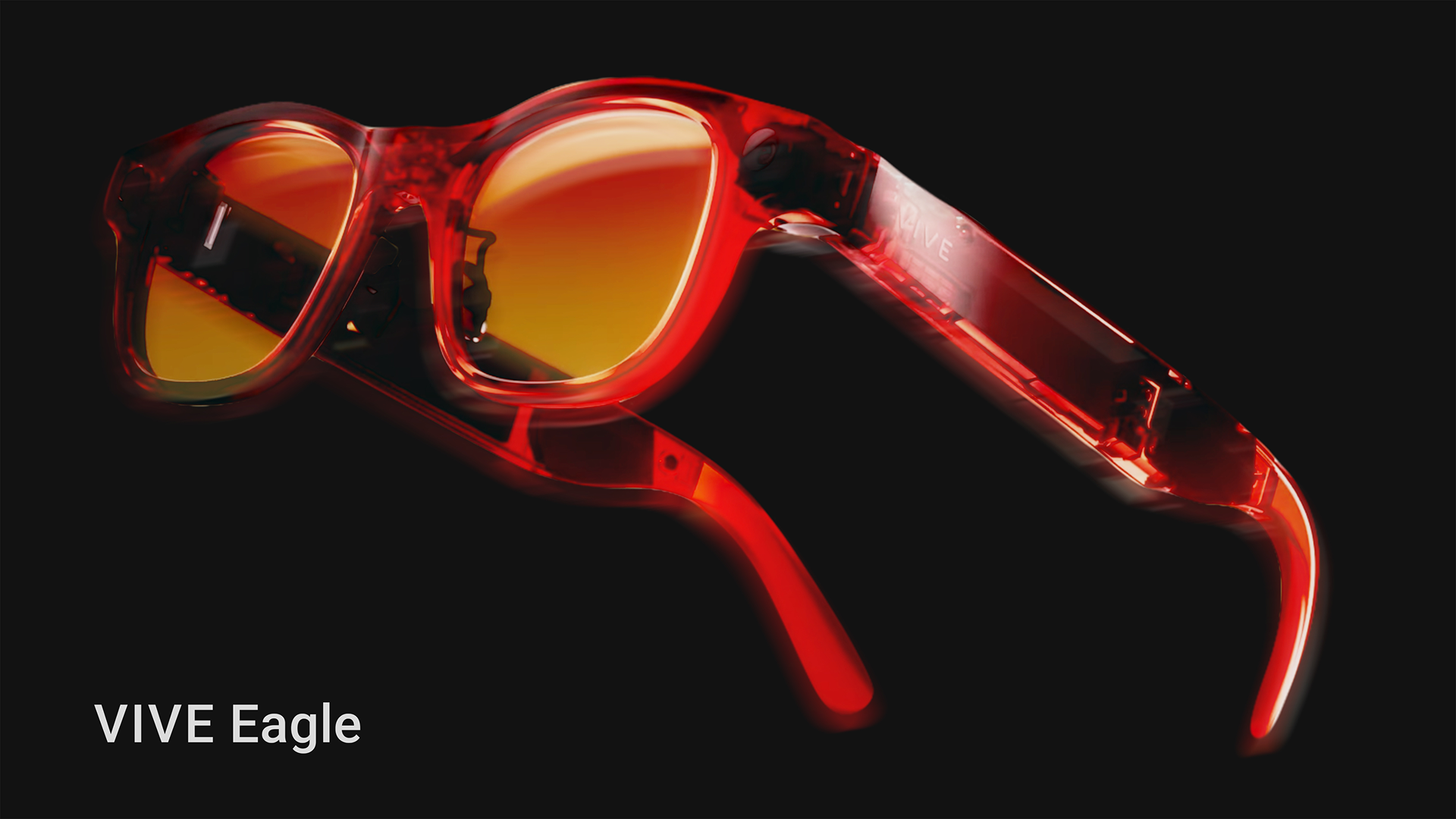
- Rokid & HTC VIVE are expanding lightweight and affordable options for enterprise, field use, and consumer travel.
Meanwhile, Google, in partnership with Samsung, holds one of the strongest cards: the Android ecosystem. With XR-ready Maps, Assistant, and a global user base, Google doesn’t just launch hardware and redefine what are smart glasses; it can push smart glasses into the immense market almost overnight.
Where It’s Heading
Smart glasses are moving from concept to cultural adoption. Their strength lies in convergence: the habit of eyewear, the familiar form factor, and the intelligence of AI aligning at once.
When technology becomes seamless and invisible, adoption follows. AR has moved past the prototype stage, and now it’s a new market reality.
Read also: Most Envisioned AR Glasses: Next Big Thing in 2026
About Lucid Reality Labs
Lucid Reality Labs is a visionary XR and AI development company that crafts complex immersive solutions through spatial technology – from concept & design to development & support, with a strategic focus on Healthcare, Life Science, Education & Training, and many more. We equip industries with the boundless potential of immersive technology. Committed to disrupting global challenges with responsible technology, we deliver impactful solutions that elevate industries through immersive capabilities. Check the award-winning use cases created by Lucid Reality Labs here.
Image sources: Lucid Reality Labs, Oakley, Meta, VIVE